Quitting is Courageous Too
Sometimes it is about survival. Only if you survive now can you thrive later. So quitting is not meant to be taken on the ego.

Suppose you are playing a Grand Slam final.
You have won the first two sets quite comfortably.
At the beginning of the third set, you suffer an injury. You call for a timeout.
The physiotherapist checks you, gives you some painkillers, and you go to take a hot shower and come back quickly on the court to face your opponent.
But the pain does not go away completely. Yet you persist with the pain.
However, the opponent clearly sees and senses an opportunity for a comeback here. He knows your weakness.
So he starts attacking you where it hurts. But you push on relentlessly, adamant about fighting for glory.
Why?
Because winning this Grand Slam final that means so much to you will make you feel like you have accomplished your biggest dream.
Despite that, you lose the third set. Now the score is 2–1.
The injury starts to hurt a little more.
But you tell yourself that you are a fighter like Novak Djokovic and that you can win this fourth set to seal the title.
So you start once again, wincing in pain. You tell yourself, “Just one more set.”
You get constant encouragement from your family and coach in the box. The fans are also cheering for you.
But the opponent is lethal too. He has sensed your strengths and weaknesses. He exploits your vulnerabilities.
You also try to bring some variation into your game using your past experience.
Although it is unnatural for you to be playing this way, you tell yourself, “Whatever gets me through.”
You win some points but lose more.
The opponent and the pain are both unrelenting.
You lose the fourth set as well. Now the score is 2–2.
You are now exhausted, both physically and mentally. The injury was physical, but the blow of losing two straight sets after being two sets to love up is a psychological blow.
Now comes the tricky and most crucial part of the match.
It is like starting the match all over again. A blank slate.
You tell yourself to forget whatever happened in the past, especially the last two sets. But you are well aware that the memories never go away. They reside somewhere in the dark recesses of the mind.
The support from your family and friends keeps getting louder.
So you say, “I will fight one more time.”
You are determined to win at all costs, even if it means losing a part of yourself on the ground, even if it means never being able to play again. You are so hell-bent on winning this trophy that you are blinded, like when you love (or hate) someone so much that you are blinded to everything else.
You are twisted by design in a way, and you cannot help it.
Now four-fifths of your journey is over. The fifth set starts.
You thought you could give your best, but you are playing just a little better than your average level of tennis, and that is simply not good enough in a Grand Slam final.
Ten minutes into the decider, you are literally limping on the ground, so much so that the opponent has started to toy with you out of sympathy.
You feel down and out. You feel dejected. You feel overwhelmed. You feel the fear of failure and all those other negative feelings.
But you say to yourself, “Even if I lose, I will finish the match!”
I will not let the fans down. I will not let my supporters down. I will not let my family down.
So you start playing like you used to play when you were a shy and scared kid, like when you used to piss in your pants.
You never wanted to go back into your shell, but the situation has forced you to go against your natural grain of playing and retreat inside.
You feel lost before you have actually lost.
Now one thing is for sure: you are not going to win this Grand Slam final.
What is not yet sure is whether you will cross the finishing line or quit before.
Why quit?
Because you want to preserve your body and mind for the future, for your family. Because matches come and go, trophies and medals come and go, but health and fitness, if damaged beyond repair, do not.
Now you ask yourself the following:
“Are you ready to take the hit of being called a loser?”
“Are you ready to face the boos?”
“Is the pain bearable?”
You start to recall those moments when your heroes fell down in the middle of a match and pulled themselves out of the tournament altogether.
When the world No. 1 badminton player, Carolina Marin, pulled out of the Olympics semifinals due to an injury, she must have had this same dilemma. But she quit knowing well that the next Olympics would come only after four years and that maybe she would be too old to even play in the next one.
Sometimes it is about survival. Only if you survive now can you thrive later.
So quitting is not meant to be taken on the ego.
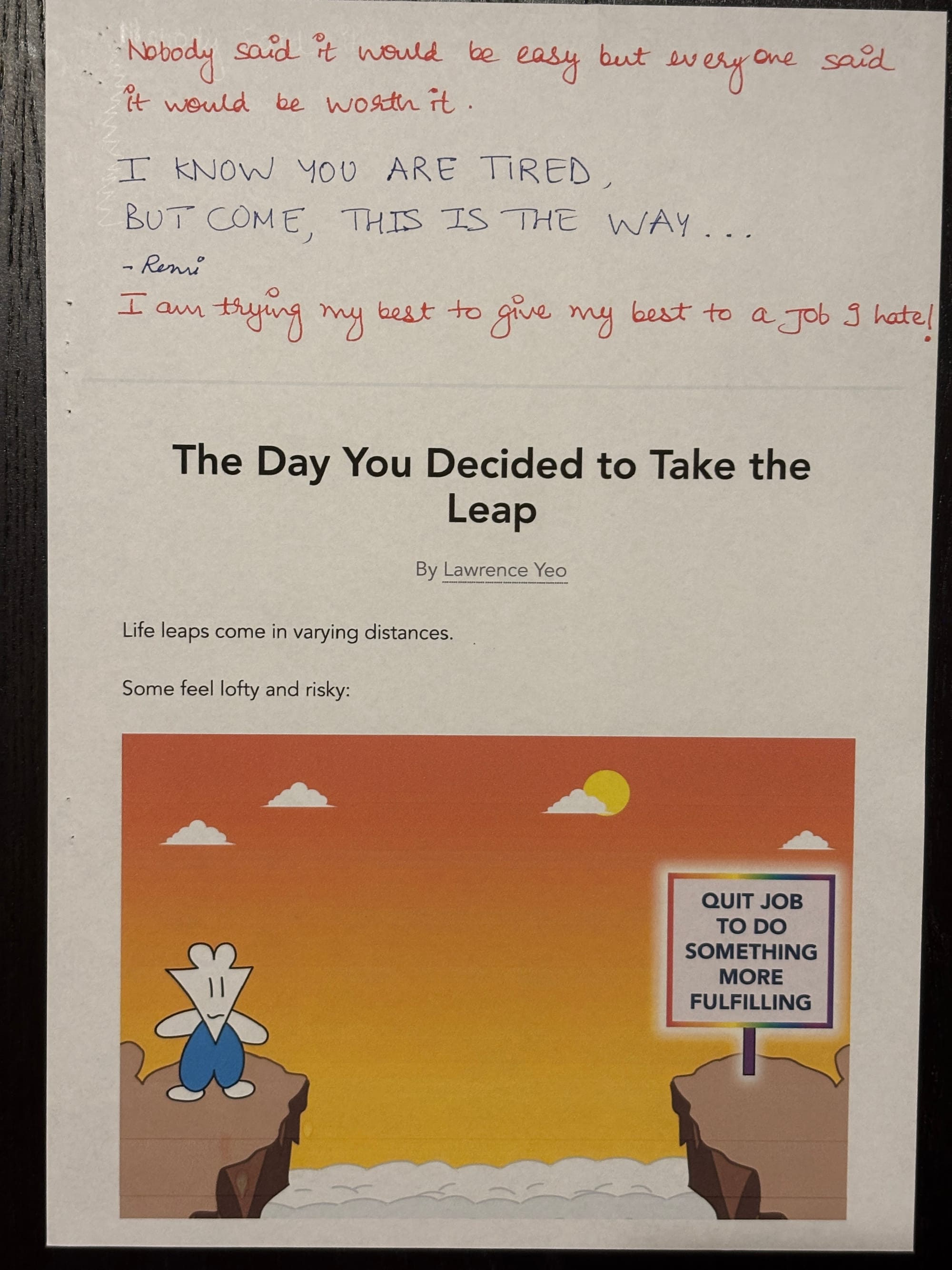
Quitting is courageous too. As extolled by Annie Duke.
Just like Gritting is. That's extolled by Angela Duckworth.