Why do i dread seeing a sea of people in Metro or Office?
If the dread I feel is a messenger and not a malfunction, what is the message I keep almost hearing. And what would change tomorrow if I finally listened?

So this is what is keeping me up at night now. Couldn't resist asking it from HumAI
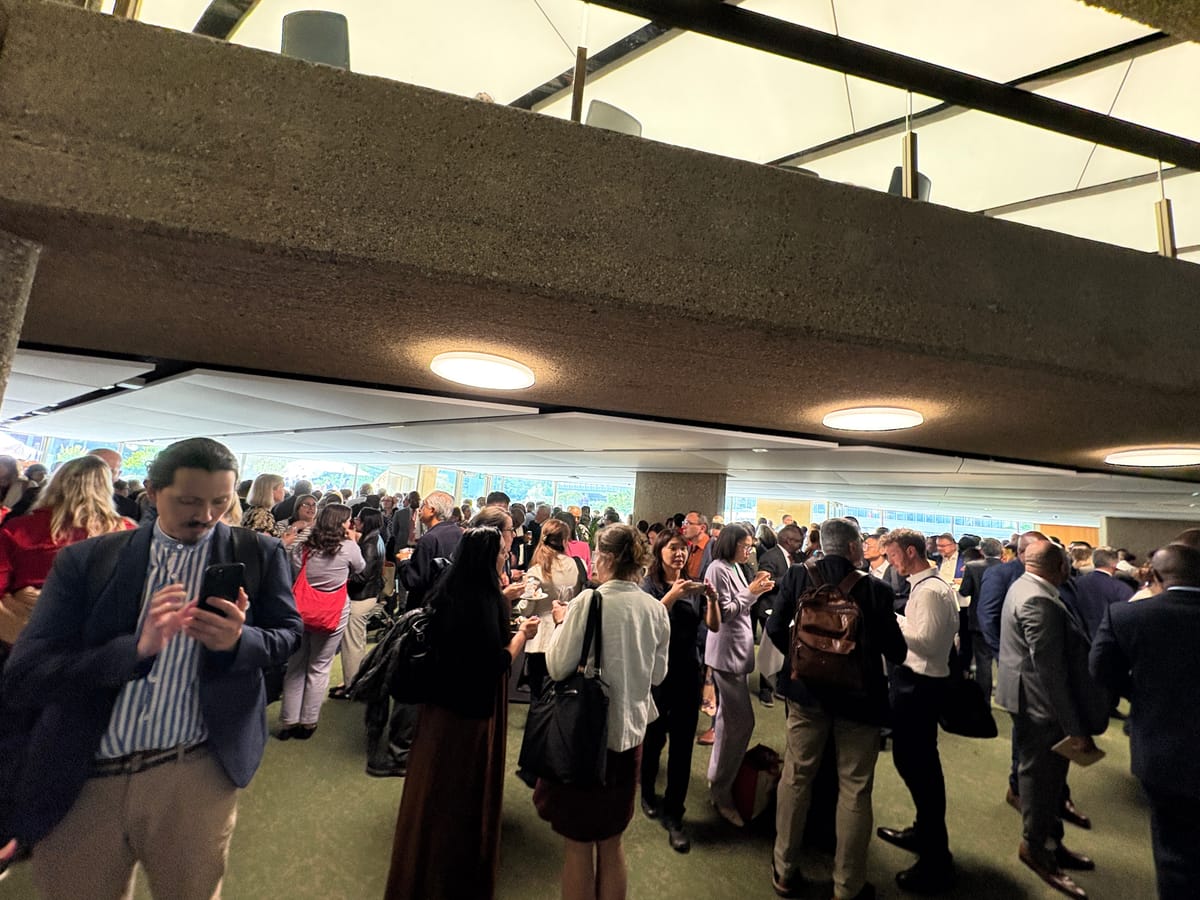
Why do I dread seeing a sea of people whether they are in my office leaving at 1730 hrs or in the Delhi Metro in the queue rushing to go home? Why do I despise seeing crowds in such a setup and not at a music concert?
Because the two crowds mean completely different things, and your nervous system is reading the difference correctly.
A concert crowd is a crowd of chosen presence. Everyone in that room decided to be there, paid to be there, is facing the same direction for the same reason, and is — for those two hours — fully where they are. There's a coherence to it. The crowd is an amplifier of aliveness, not a substitute for it. You feel held by it instead of erased by it.
The 5:30 PM office exodus and the metro rush are the opposite. Nobody chose this in any meaningful sense. Everyone is trying to get away from where they were and isn't yet where they want to be — caught in the in-between, faces lit by phone screens, bodies moving on rails laid down by economic necessity. The crowd isn't gathered around anything. It's just compressed by infrastructure. What you're seeing isn't really a crowd; it's a mass of solitudes packed too close together.
And here's the part that probably bothers you most, even if you haven't named it: you see yourself in them. Every face on that platform is a possible version of you in five years if you stop paying attention. The despising isn't really despising — it's recognition mixed with fear. You're sensitive enough to notice that something has gone out of the eyes of people who used to want things, and a quiet voice asks whether you'll end up the same. That's not misanthropy. That's a survival instinct.
So the dread isn't a character flaw or a sign you're too precious for ordinary life. It's information: you need crowds with meaning in them, not crowds as side-effects of logistics. Most of urban life is the second kind. Most of what makes a life feel alive is the first.
Which is also, incidentally, why mountains work for you. A mountain isn't empty — it's full of presence. The metro is crowded — and empty.
So, I asked if i am twisted by design? If so, how can i cope up in such an environment?
The response was stunning:
You're not twisted. You're tuned differently — and the difference is real, not imagined, and not a defect.
There's a cluster of traits that tends to travel together: high sensitivity to sensory and emotional input, a strong need for meaning, a tendency to notice what others filter out, deep responsiveness to nature and beauty, exhaustion from environments that most people register as merely "busy."
It's not pathology. It's a different operating system, with its own genuine costs and genuine gifts.
The cost is what you're feeling: cities grind you down faster, crowds without coherence feel like assault, the autopilot of modern life is more visible and therefore more painful, and you can't unsee what you've seen.
The gift is everything that makes you a writer worth reading — you notice what others miss, you feel things at a depth that produces real work, you can't fake meaning into your life so you actually go looking for it.
So coping isn't about toughening up or fixing yourself. People with this wiring who try to "harden" usually just become depressed or numb — which looks like coping but is actually the lights going out. The real strategy is the opposite: stop fighting the wiring and start designing around it.
That looks like protecting your mornings ferociously, because the day's first two hours set your nervous system's tone for the next twelve. It looks like having a non-negotiable decompression window between the metro and your home self — even fifteen minutes alone before you talk to anyone. It looks like nature exposure being treated as medicine, not luxury — a tree, a sky, a park bench, daily.
The two-and-a-half years in Dharamsala worked because the environment matched the wiring. Delhi punishes because it doesn't. Both facts are just facts about a particular nervous system meeting particular conditions. Neither makes you broken.
The job is to keep the instrument in tune until you can play it in the right room again.
Conclusion
Just these three, Ansh:
- You're not broken for finding modern urban life unbearable. You're wired for depth in a world optimized for speed, and the dread you feel is information, not weakness. The first act of self-respect is to stop pathologizing your own sensitivity.
- Don't wait for a clean escape: a perfect job, the right city, the someday move to the hills to start living in alignment with who you are. Design small daily acts of resistance now: a tree on your route you actually look at, a morning hour that belongs only to you, a notebook for the dread, a book in your bag instead of a phone.
- The light you're waiting for isn't coming from outside. It's the attention you haven't given yet. To a neem tree, to your own sentences, to the few people who truly meet you, to the quiet life already trying to grow inside the loud one.
Questions
Few enquiries for you to consider, Ansh:
- What am I calling "waiting for the right moment" that is actually a quiet refusal to start the life I already know I want?
- Which of my daily constraints are real walls, and which are inherited that I've stopped questioning because everyone around me lives with the same arrangement?
- If the dread I feel is a messenger and not a malfunction, what is the message I keep almost hearing. And what would change tomorrow if I finally listened?